Scaffolding
I started thinking about scaffolding after drawing from this 20th century photograph where a group of men are captured scaling a makeshift stand to view some sot of racing event. When drawing from the picture I found it interesting how stand organised the picture into geometric spaces which the individual people being organised within and cut up by the structure as well as kind of hung onto it.
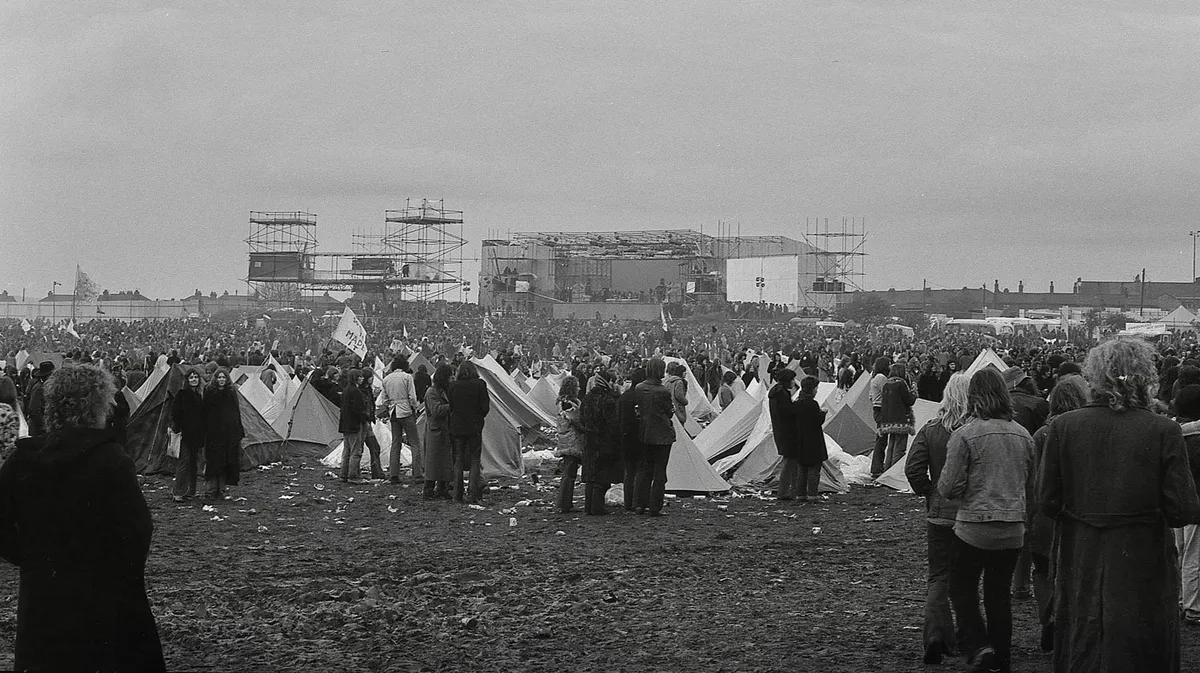
Later, I came across images from the 1972 Bickershaw Festival also featuring a set of makeshift scaffolds. The stage is this kind of labyrinthine block of metal poles with odd towers and landings appended to it. Then there's this striking bridge-like structure with within the crowd, maybe designed to hold speakers but ultimately becoming a viewing platform / climbing frame.
I think he appeal of these pictures is the lack of order. The freedom of these spectators feels unimaginable in today's culture of safety checks and public liability insurance. There's a push and pull between the sense of freedom and peril, especially once you've seen photographs of similar stages which have collapsed due to negligence.
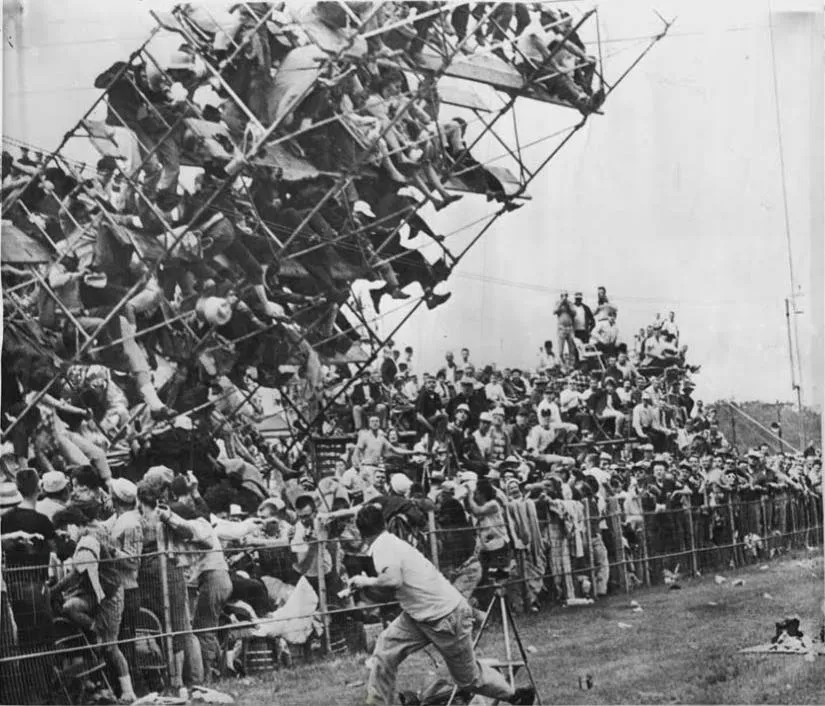
This photograph shows a fan-constructed scaffolding collapsing at the 1960 Indianapolis 500. Two people died and 80 were injured - Photographs of this event are at once, deeply shocking and compelling...
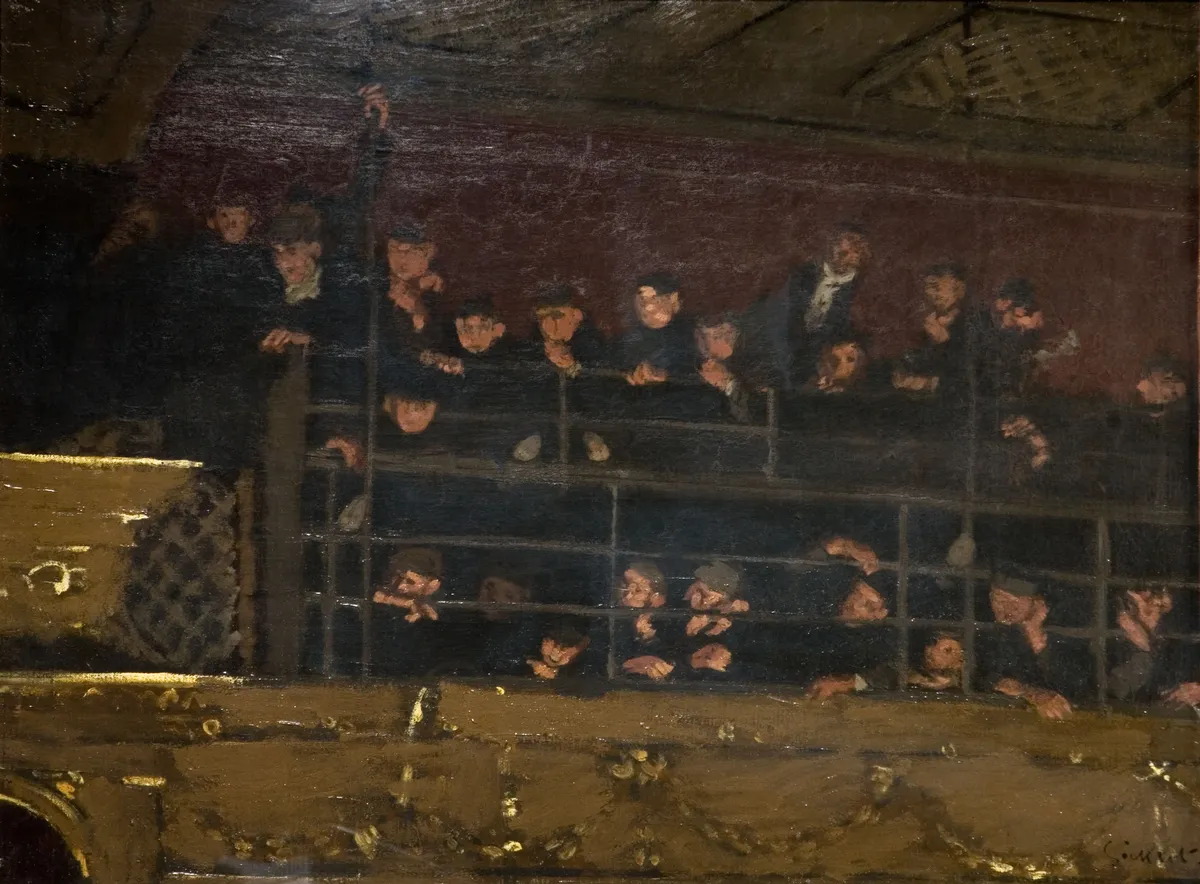
On a less macabre note I also want to take note of Walter Richard Sickert's 1906-7 painting 'Noctes Ambrosionae, Gallery Of The Old Mogul'. This picture shows a very similar type of scene albeit with a more intimate tone. In one of my drawing classes the other student's were sharing memories of this special kind of viewership, seeing a play or opera from the wings or the rigging above the audience. Sickert's paintings seem to want to capture this, turning the view away from the action or making the whole auditorium part of the drama.
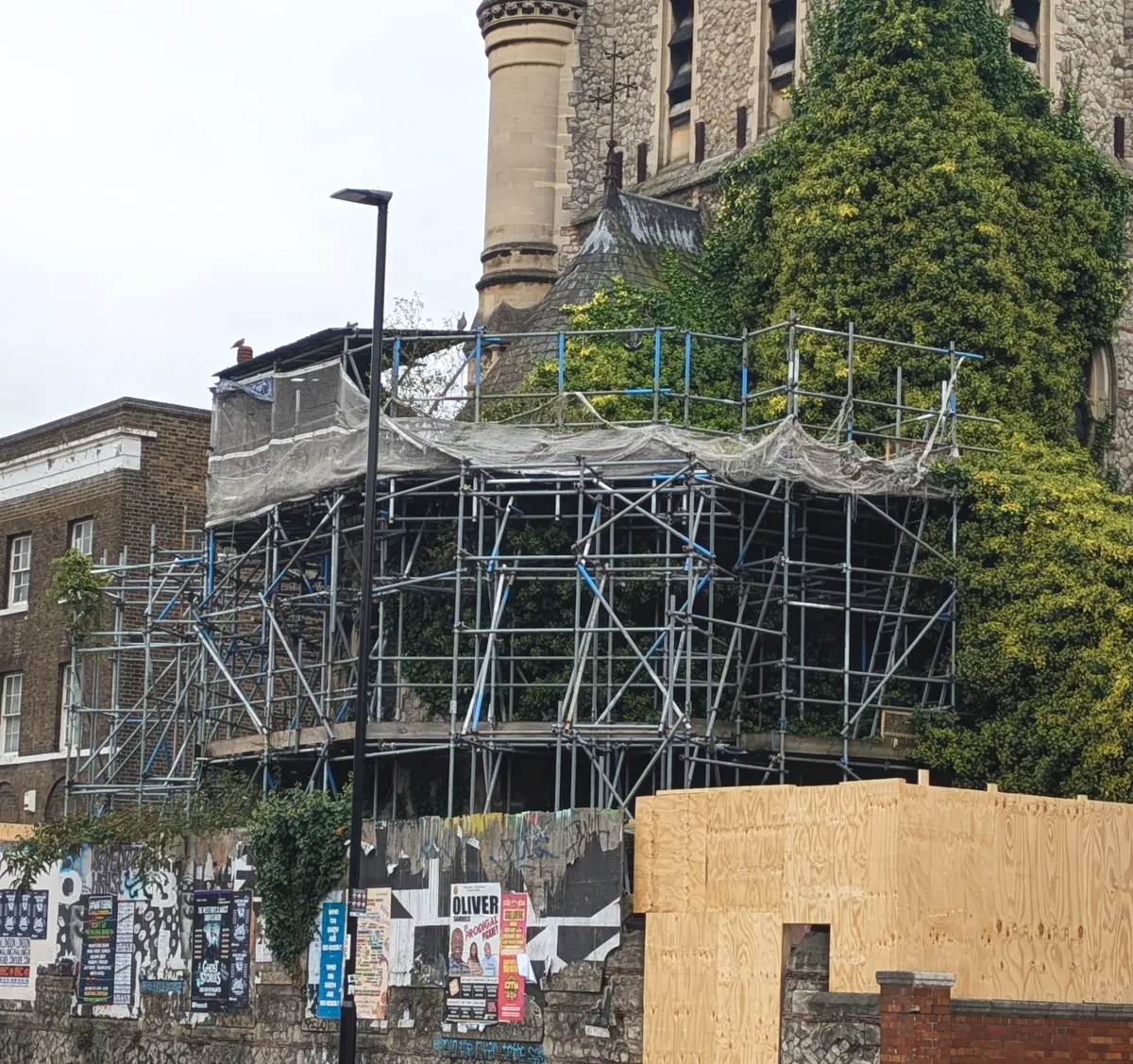
I really like how the scaffolding and the building have been bound together by the ivy. There's a whole ecosystem of structures, the scaffold represents the fragility and the bureaucratic systems which have led to the buildings neglect. The stone is resolute, seemingly unbothered by the other objects clamouring up its surface. The ivy doesn't distinguish between the other two, showing no preference between the stone and the metal poles for its armature.